
Every day, consumers move between dozens of websites, apps and devices. They check email over morning coffee, scroll social media during lunch, stream television at night, search Google when they need answers and catch up on local news throughout the day.
Each interaction creates another opportunity for businesses to reach potential customers, but it also creates more competition for one limited resource: attention.
The goal isn’t simply to gain attention for a moment. It’s to earn it in ways that build recognition, trust and lasting customer relationships.
For businesses, this creates a different marketing challenge than it did just a few years ago. Success is no longer determined by who can create the most advertisements. It’s determined by who can create the most meaningful interactions.
Businesses that consistently earn attention usually provide value for customers before asking them to make a purchase.
Why attention has become harder to earn
Not long ago, businesses had fewer places to reach potential customers. A newspaper ad, television commercial or radio spot could capture a large share of the local audience because consumers had fewer competing sources of information.
Today, people move between multiple devices and platforms throughout the day. As the number of choices has grown, the amount of time consumers have available has not.

That makes people more selective about what deserves their attention.
When information is constantly available, consumers quickly filter out messages that do not feel useful or timely. They skip ads, ignore emails, scroll past social posts and tune out repetitive messaging.
This does not mean advertising has become less effective. It means reaching a large number of people is no longer the only measure of opportunity.
Instead of asking:
“How do we reach more people?”
Businesses should ask:
“How do we reach the people most likely to care?”
Audience quality often matters more than audience size because connecting with people who are genuinely interested in a product or service creates a stronger foundation for future engagement.
Why useful, relevant and timely marketing wins

Once a business reaches the right audience, the message still needs to give people a reason to stop and engage. That value does not always come in the form of a discount or promotion. It can come from answering a common question, helping someone solve a problem or providing information that reflects what they are currently considering.
For example:
- A roofing company might explain how homeowners can identify hail damage after a storm.
- A financial advisor could share year-end tax planning tips.
- A healthcare provider might answer common questions about preventive screenings.
- A local retailer could publish holiday gift guides or back-to-school shopping ideas.
- A home services company might offer seasonal maintenance advice before winter arrives.
When businesses answer questions customers are already asking, their marketing becomes more useful and easier to remember.
Attention is earned when marketing serves a clear purpose.
That purpose could include:
- Helping consumers make informed decisions
- Providing timely information tied to seasonal needs
- Offering practical resources rather than relying only on promotions
- Addressing common concerns before customers are ready to make a purchase
This approach allows businesses to demonstrate their expertise and provide value before asking for a commitment.
Why more impressions don’t always create more impact

Many businesses assume that increasing the number of impressions will automatically improve campaign performance. Repeated exposure can help build familiarity, but consumers do not remember a business simply because they have seen the same advertisement dozens of times.
The quality of each interaction matters just as much as the quantity.
Frequency alone does not guarantee impact.
For example, a local retailer repeatedly promoting the same weekend sale to shoppers who have little interest in its products is unlikely to see stronger results simply by increasing the number of ads. Reaching shoppers who are genuinely interested in those products with timely creative is more likely to capture attention.
Stronger campaigns combine thoughtful messaging with strategic audience targeting and placement so each impression has a greater opportunity to contribute to the overall campaign.
Impact comes from a combination of factors, including:
- Reaching the right audience
- Delivering clear messages and compelling images
- Appearing in the channels and environments the audience already uses and trusts
- Showing up at meaningful moments throughout the buying process
- Varying the message as customers move closer to making a decision
When these elements work together, each impression serves a purpose. Rather than simply adding another exposure, it helps strengthen recognition and move consumers closer to taking action.
The goal is not just to be seen more often. The goal is to be remembered for the right reason.
Why integrated marketing builds stronger brand recognition
Consumers rarely interact with a business through a single channel before making a purchase. More often, they encounter the brand several times in different places before taking action.
A homeowner researching a remodeling project, for example, might first notice a display advertisement while reading local news. Later, they may see a connected TV advertisement, search for the company online, read educational content on its website and eventually respond to an email promotion.
Each interaction builds on the previous one.
Rather than asking one marketing channel to accomplish every objective, businesses can use multiple channels that support one another throughout the customer journey.
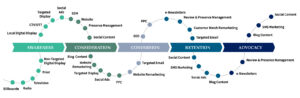
For example:
- Display advertising introduces the brand and builds initial awareness.
- Search helps consumers find the business when they are actively researching their options.
- Sponsored content answers questions and demonstrates expertise.
- Social media keeps the business visible, drives website traffic and highlights timely products, services or offers.
- Connected TV and streaming video reinforce the brand through memorable visual storytelling.
- Email maintains the relationship with prospects and customers through updates, resources and promotions.
When these efforts work together, consumers experience a more consistent brand journey. Each channel plays a different role while reinforcing the same overall identity.
This coordinated approach also allows businesses to adjust their messaging based on where customers are in the buying process. Someone encountering a business for the first time may need an introduction, while someone actively comparing options may be ready for more detailed information or a stronger call to action.
Why attention is a long-term business asset

Attention should not be measured by a single campaign. It should be viewed as an investment that builds familiarity, credibility and trust over time. Businesses that consistently provide useful information and maintain visibility are more likely to remain top of mind when customers are ready to make a decision.
That long-term perspective also creates more flexibility. Instead of relying on short bursts of engagement, businesses can build stronger relationships through a series of connected experiences.
Attention is rarely earned through one advertisement. It develops when every channel, message and campaign contributes to a larger strategy.
That is why many organizations are moving beyond isolated tactics and toward integrated marketing plans, sometimes referred to as multimedia or omnichannel marketing. These strategies bring together audience insights, thoughtful design, ongoing optimization and measurable results.
The goal is not simply to gain attention for a moment. It is to build meaningful connections that continue delivering value long after the first impression.
Turning attention into lasting growth
Earning attention has become more challenging, but it has also become one of the greatest competitive advantages a business can build.
Organizations that focus on usefulness instead of volume, memorable experiences instead of repeated exposure and long-term consistency instead of short-term visibility are better positioned to create lasting relationships with their audiences.
At Forum Communications Advertising, we help businesses develop integrated marketing strategies that connect with the right audiences across digital advertising, content marketing, search, streaming, social media and other channels designed to work together.
By combining local market expertise, first-party audience insights, creative support and ongoing campaign optimization, businesses can turn attention into stronger brand recognition and long-term growth. For information on what we do and how we can help your business, connect with us today!