
When economic conditions become uncertain, marketing is often one of the first budgets put under scrutiny. The logic seems straightforward: spend less until conditions improve.
Yet history consistently shows businesses that disappear from the market during difficult periods face a much steeper climb to regain brand recognition and sales when conditions improve. Customers don’t stop making decisions during periods of uncertainty. They simply become more selective about who earns their attention and trust.
The question isn’t whether businesses should market during challenging times. The question is how to market more effectively when resources are limited.
The real risk isn’t spending less. It’s losing relevance.
When budgets come under pressure, many organizations focus on reducing costs as quickly as possible. While evaluating spending is important, it’s equally important to consider what happens when customers stop seeing and hearing from your brand. Visibility plays a critical role in maintaining awareness, trust, and future purchasing consideration.
Consider these realities:
- Competitors don’t all pull back at the same time.
- Customer needs continue to evolve regardless of economic conditions.
- Brand familiarity influences buying decisions long before a purchase is made.
- Gaps in visibility create opportunities for competitors to gain ground.
Rather than asking, “What can we cut?” organizations should ask, “What keeps us relevant to customers?”
Maintaining relevance doesn’t always require larger budgets. It requires a deeper understanding of audience behavior, changing customer expectations, and the channels that influence decision-making. Learn more about important factors in setting your advertising budget here.
Efficiency has replaced volume as the competitive advantage

For years, marketing success was often associated with scale. Today, efficiency matters more.
The shift toward precision marketing reflects several market pressures.
These pressures include:
- Reaching more people doesn’t automatically create better outcomes.
- Precision often outperforms broad exposure when budgets are tight.
- Businesses are under pressure to justify every investment.
- Strong targeting and audience insights have become strategic advantages.
The organizations gaining ground are not necessarily spending more. They are making more informed decisions about where and how they invest.
Understanding where audiences spend their time, how they consume information, and what influences their decisions has become increasingly important. Organizations with access to meaningful audience intelligence are often able to make more confident marketing decisions because strategy is built on actual consumer behavior rather than assumptions. Learn more about how to follow your audience anywhere with precision here.
Omnichannel marketing is in. Single channel is out.

The traditional view of marketing channels as separate efforts no longer reflects customer behavior.
Customers move seamlessly between multiple touchpoints throughout their decision-making process:
- Search engines for initial research
- Social platforms for peer recommendations
- Streaming services for entertainment and discovery
- Email for targeted offers and updates
- Websites for detailed comparisons
- Physical environments for final evaluation
This is important because:
- The customer journey is rarely linear
- Repetition across trusted environments builds familiarity
- Consistency often matters more than frequency
- Different touchpoints serve different purposes in the buying process
Businesses should think in terms of audience experience rather than channel management.
The most effective omnichannel strategies are not simply about being present in more places. They are about creating connected experiences that align with how customers naturally move through the buying process.
Why marketing data is important for better business decisions
One of the biggest challenges facing organizations today is distinguishing activity from impact.
Marketing teams have access to more data than ever, yet many organizations still struggle to connect performance metrics to business outcomes.
Common data challenges include:
- Too many reports, not enough insights
- Metrics that measure activity instead of impact
- Disconnect between marketing data and business results
- Decision-makers overwhelmed by information
The most valuable marketing data helps answer business questions, not marketing questions.
This is where many organizations encounter challenges. Collecting data is relatively easy. Turning that data into actionable insights that inform business decisions is significantly more difficult.
The ability to connect audience behavior, campaign performance and business outcomes has become a competitive advantage in itself. Organizations that combine audience insights with performance data are often better equipped to identify opportunities, optimize investments, and adapt more quickly when conditions change. Learn more about what marketing metrics you should track and the role they play in your business here.
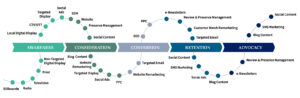
Instead of focusing on surface-level metrics, organizations should prioritize understanding:
- Which activities drive qualified leads
- What shortens sales cycles
- Which channels increase customer lifetime value
- How marketing investments impact revenue growth
Adaptability is the new marketing strategy

Market conditions change. Consumer behavior changes. Competitive landscapes change.
The organizations that perform best are often the ones that adapt the fastest.
Building adaptable marketing systems include:
- Campaigns that evolve as conditions evolve
- Regular assessment of customer priority shifts
- Ongoing optimization that creates compounding advantages
- Flexible processes that support rapid iteration
This is less about reacting and more about building systems that allow organizations to respond intelligently.
Key components of adaptive systems:
- Real-time performance monitoring
- Rapid testing and iteration capabilities
- Cross-functional communication systems
- Budget allocation flexibility
Organizations that build adaptability into their marketing operations are often better equipped to navigate uncertainty because they can make informed adjustments instead of reactive decisions. Learn more about advertising today and what’s changed.
Moving forward in uncertain times
Periods of economic pressure reveal the difference between visibility and value. Visibility alone is not enough. Businesses must stay relevant, targeted, measurable, and adaptable.
The companies that emerge strongest are rarely the ones that spend the most. They’re the ones that understand their audiences, make informed decisions and remain present when competitors pull back.
At Forum Communications Advertising, we help businesses turn these principles into action through audience-focused strategies, integrated marketing solutions, data-driven insights, and cross-channel campaigns designed to keep brands visible and relevant.
Economic uncertainty doesn’t eliminate opportunities for growth. It changes how businesses need to approach the market.
If you’re looking to improve marketing efficiency, better understand your audience, or build a strategy for today’s changing environment, connect with the Forum Communications Advertising team.
Connect with our team today to start the conversation.